Sunday, May 20, 2012

Saturday Afternoon Get-together

This is the third time I have tried blogging today and lost it.  What is going on?! 

I chose this picture of all the chickens chatting it up at Loma Vista Farm because it reminded of all the humans and other animals I saw out there visiting with each other and having a great time.   The weather could not have been more perfect and a good time was had by all, from the youngest to the eldest.  I saw several friends I hadn't seen for some time and it was great to reconnect.  I also got to know the ladies that I shared the booth with a little.  What a great day.  It was their Spring Festival.  I was helping out at Food Co-op booth.  They are trying to get a food co-operative started here in Vallejo and are looking for people with experience in finance, grants, and grocery, and especially PEOPLE with a little money (not more than $300) to buy ownership so this can happen.  It would be fantastic for the people of Vallejo.  We talked to a lot of interested people which was exciting.  Again, I am overwhelmed with the amount of different breeds of chickens that exist.  Here is some info about a couple of breeds they have at the LV farm:

The Plymouth Rock, often called simply Rocks or Barred Rocks (after their most popular color), is a chicken breed that originated in the United States. The Plymouth Rock is a dual-purpose, cold-hardy bird and therefore makes a great breed for the small farm or backyard flock owner. The Barred Rock is often called the Plymouth Rock, but this title correctly belongs to the entire breed, not just the Barred variety.

Plymouth Rock
Barred Rock hen in backyard.jpg
A Barred Rock hen as part of a small backyard flock (with eglu in background)
Conservation status Recovering
Country of origin USA
Nicknames Rocks or Barred Rocks
Classification
APA American
Notes
Dual purpose breed
Chicken (Gallus gallus domesticus)

Famous Hamburgs

Perhaps the most famous devotee of the Hamburg chicken was L. Frank Baum, author of the Oz books. He began a monthly trade journal, Hamburgs, in 1880 and in 1886, published his first and only book on the subject, The Book of the Hamburgs: A Brief Treatise upon the Mating, Rearing, and Management of the Different Varieties of Hamburgs.[3]
In Baum's third Oz book, Ozma of Oz, he introduces Dorothy Gale's chicken, Billina. He must have drawn on his experience in breeding Hamburgs when creating her character, as she is appropriately spirited and active.
Hamburg
Silver-Spangled Hamburg Sam dinner.jpg
A Silver-Spangled Hamburg Rooster
Conservation status Watch
Other names Hamburgh
Country of origin Holland
Nicknames Dutch Everyday Layers
Everlayers
Classification
APA Continental
Notes
Layer breed
Chicken (Gallus gallus domesticus)


Saturday, May 12, 2012

doves - twin posts

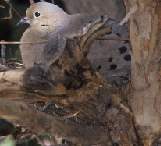
These mourning doves were out to greet me this morning.  Well, really they were interested in eating whatever was out there on the sidewalk.  They were enthusiastically munching away right in front of me when they knew very well that I had to go weigh in at Weight Watchers.  I lost .2 which I am not surprised as I had two difficult days - one being Day of the Teacher in which the union put on a celebration.  I did forego the dessert except for one bite of apple pie.  I know, I know - I have to count every bite, lick, and taste.  Let me put it this way - I'm glad I didn't gain.  This is so difficult!!!  Anywho - I chose the mourning doves because they are closely related to pigeons and I am blogging very closely together - at the end of one week and the beginning of the next.  alls and Songs
Sometimes mistaken for an owl, the male's courtship and territorial call is a series of cooing notes.  It sounds like coah cooo cooo coo.  Both adults give a shorter call like oowa when near the nest.  There is also a whistling twitter when they take off.
Hear Mourning Dove Sound
Range and Habitat

In late fall mourning doves gather in large flocks across nearly all of the United States, and southern Canada.  Many, but not all northern mourning doves migrate south in winter.  They can be found in grasslands, farmlands, open woods, and roadsides.  They are equally at home in backyards with evergreens, fruit trees, and suburban gardens.  In fact they are at home in virtually any habitat.  When you hear talk of a bird for all seasons this is it.

Breeding and Nesting
Mourning Dove
Mourning doves breed in all 50 states, southern Canada, Alaska, Mexico, and into Panama.  Breeding starts in March and April.
photo by Lee Karney U.S. Wildlife
Courtship starts with the male cooing call while puffing out his throat, and bobbing his tail. The Fish and Wild Life Service actually counts them by listening for this call. Another part of the courtship is the flight of the male. He will fly to around 100 feet then glide back down to the female in large sweeping circles. He will also strut and bow repeatedly in front of the female.  After mating the male vigorously defends the nesting area.  What is unusual is the Morning doves will do most of their feeding outside the nesting area.

The nesting site is often on a tree branch 10 to 25 feet up, and is chosen by the male.  He then gathers sticks, and bring them to the female, landing on her while she sits on the partly built nest.  Although they seem to take great care, their nest is one of the flimsiest of all bird nests.  The eggs can even be seen through the twigs.  Often they will just use old nests from other birds such as robins.

Usually there are two white eggs with both birds taking turns on the nest.  Many nests are lost to bad weather.  In addition doves have many predators such as squirrels, snakes, and other birds.  Both adults will feed the young, and they can leave the nest in 10 to 14 days.hey will have as many as six broods of two chicks each during a season.  This fast reproduction allows them to thrive and spread even with high predation.  Young birds leave the nest in around two weeks and the parents continue to feed them outside the nest for another two weeks.

Food and Feeding

Mourning doves natural foods are a wide variety of wild seeds, grains, and insects.  They often feed on grain in open fields, and croplands.  They will be seen at feeders in larger numbers when the ground is covered in deep snow.

Just as with other songbirds, food, water, and cover will attract them to your backyard.  Stock your feeders with cracked corn, millet, and a variety of other seeds to attract Mourning doves.  Doves are ground feeders, so tray feeders are best.  While many songbirds will scatter when jays or crows arrive, Mourning doves will just ignore them and keep eating.
Water
Birdbaths will attract them, but running or dripping water will draw more birds. You are also likely to get more birds if you have trees, and shrubs for cover.

Pidgeon Power


I never knew there were so many different types of pigeons.  This I believe is the rock pigeon though I don't see the bands of the wings that is talked about on Wikipedia.  I know they have a bad reputation just because there are so many of them everywhere (just like my students). They do have some beautiful coloring, and just like my students, I need to remember to look at the individual and not just the entire group.  That's not often easy (it's hard to see the trees for the forest).  Oh my! I'm full of this as this is what we have been working on in class.  These feathered friends were hanging out at the waterfront this week where I took a walk with my former partner, but still friend - P.  Here are some fun facts about pigeons.

Cool Pigeon Facts


Origins: Pigeons and doves have been around for a long time—long before humans. Rock Doves are thought to have originated in southern Asia several million years ago. Compare this to modern humans that first appeared about 120,000 years ago.
Size and weight: A pigeon is about 13 inches (32 cm) in length from bill to tail and weighs a little less than a pound (0.35 kg). Males are slightly bigger than females.
A pigeon family:
  • Hen: an adult female pigeon
  • Cock: an adult male pigeon
  • Hatchling: a newly hatched pigeon
    just a few days old
  • Squab: a young pigeon from 1–30 days old.
    When ready to leave its nest, a squab can sometimes weigh more than its parents.
  • Peeper or Squeaker: a young bird that is learning to eat
  • Fledgling: a bird that is ready to fly or that has just taken its first flight
  • Juvenile: a bird out of its nest and flying but less than eight months old
Nest and roosting sites: A pigeon nest usually is constructed on covered building ledges that resemble cliffs, a Rock Dove’s natural habitat. They also nest and roost on the support structures under bridges in cities and along highways.
Nests: Pigeons build their nests with small twigs. A cock brings the nesting material to his mate, one piece at a time, and she builds the nest. Nests are usually well-hidden and hard to find.

Eggs and incubation: Pigeons usually lay two white eggs. The parents take turns keeping their eggs warm (incubating). Males usually stay on the nest during the day; females, at night. Eggs take about 18 days to hatch.
Food for young: Both male and female parent pigeons produce a special substance called "pigeon milk," which they feed to their hatchlings during their first week of life. Pigeon milk is made in a special part of the bird’s digestive system called the "crop." When hatchlings are about one week old, the parents start regurgitating seeds with crop milk; eventually seeds replace the pigeon milk.
Colors: There may be as many as 28 pigeon color types, called "morphs," but Project PigeonWatch groups them into just seven morphs. Pigeons also have colorful neck feathers. These iridescent green, yellow, and purple feathers are called "hackle." Adult males and females look alike, but a male’s hackle is more iridescent than a female’s.
White "color:" White feathers are actually feathers that have no color pigments. So, when you see white on pigeons you are actually seeing no color.
Feathers: Pigeons have many types of feathers including contour feathers, the stiff feathers that give the body its shape, and down, the fluffy insulating feathers. Many pigeon feathers are accompanied by one or two filoplume feathers, which look like hairs. These filoplumes may have sensory functions, such as, detecting touch and pressure changes.
Eye colors: Adults have orange or reddish orange eyes; juveniles that are less than six to eight months old have medium brown or grayish brown eyes.
Leg and feet colors: Pigeon legs and feet are red to pink to grayish black. Their claws are usually grayish black but can be white on some pigeons. Some birds have "stockings," which are feathers on their legs and feet!
Cere: The cere is the fleshy covering on the upper part of a pigeon's beak.  It is grayish in young birds or juveniles, and white in adults.  Albino birds may have pinkish ceres.
Eyesight: Pigeon eyesight is excellent. Like humans, pigeons can see color, but they also can see ultraviolet light—part of the light spectrum that humans can’t see. Pigeons are sometimes used in human search-and-rescue missions because of their exceptional vision.
Hearing: Pigeons can hear sounds at much lower frequencies than humans can, such as wind blowing across buildings and mountains, distant thunderstorms, and even far-away volcanoes. Sensitive hearing may explain why pigeons sometimes fly away for no apparent reason: maybe they heard something you can’t.
Sounds: Pigeons make two types of sounds: vocal (using voice) and nonvocal. The primary call used by males to attract mates and defend territories is coo roo-c’too-coo. From their nests they might say oh-oo-oor. When they are startled or scared they might make an alarm call like: oorhh! Pigeon babies make nonvocal sounds such as bill snapping and hissing. After mating, males often make clapping sounds with their wings.
Unique drinking behavior: Most birds take a sip of water and throw back their heads to let the water trickle down their throats. But pigeons (and all of their relatives in the family Columbidae) suck up water, using their beaks like straws.
Magnetic sensitivity: Do pigeons have compasses in their heads? Not really, but pigeons, especially those bred for their homing instincts, seem to be able to detect the Earth’s magnetic fields. Cornell University pigeon researcher Dr. Charles Walcott says that magnetic sensitivity, along with an ability to tell direction by the sun, seems to help pigeons find their ways home.
Locomotion: On the ground, pigeons don’t hop the way many birds do. They walk or run with their heads bobbing back and forth. Pigeons are strong fliers and can fly up to 40 or 50 miles per hour. Some pigeons are raised for their exceptional abilities to fly fast and find their ways home. These pigeons may fly as far as 600 miles in a day.  Although feral pigeons are good fliers too, most of these birds seem to stay close to their regular feeding sites.
Natural predators: One species of falcon, Merlin, eats so many pigeons its scientific name is Falco columbarius (with the "columba-" meaning pigeon) and it was formerly called Pigeon Hawk. Merlins are medium-sized falcons and although they are not very common in cities, you can bet they are preying on pigeons living in open parks near marshes and ponds. In cities where Peregrine Falcons have become established, they catch and eat feral pigeons, often carrying them back to feed to their nestlings. Red-tailed and Cooper’s hawks also prey on pigeons in cities and in rural areas.
Fancy pigeons: People raise all kinds of fancy pigeons. The breeds have names, such as rollers, tumblers, and fantails, which reflect the way the birds fly or the way they look. Sometimes, people take their fancy pigeons to compete in shows.

Sunday, April 29, 2012

Spring has Sprung

Check out this youtube video my sort-of son-in-law's father sent me.  The bird is a hummingbird again, but really worth the video.  I've been springing around everywhere trying to get myself organized, but alas, I always seem to need more time, and we all know how limited time is - it waits for no one.  CSTs this week.  I hope our students take it seriously and try their best. 

Tuesday, April 24, 2012

Falcons

I saw this on the news last night.  Go to See It On Tv - ABC Channel 7
Nest Cam - San Francisco

Donate This view of Peregrine Falcons is possible because biologists at UC Santa Cruz and Cornell University collaborated in the mid-1970s to restore a nearly extinct Peregrine Falcon population. At the time, two pairs were known in California—none could be found nesting east of the Mississippi River.
Widespread use of the persistent pesticide, DDT, contaminated the environment worldwide resulting in eggshell thinning that decimated the Peregrine population. DDT was banned by the Environmental Protection Agency in 1972. For the next three decades, the U. C. Santa Cruz Predatory Bird Research Group bred falcons in large aviaries, hatched thin-shelled eggs, climbed to the Cliffside nests of these birds, and restored the California population to an estimated 250 pairs—up from just 2 pairs.
We celebrate this extraordinary success story with the falcon nest camera view of wild nature as it unfolds above city streets. We share the story with school students by presenting school assemblies and with the community by engaging the participation of a large network of UC Santa Cruz students and community volunteers who assist with our ongoing baseline research on this species.
To learn more and be a part of an ongoing discussion about these birds, join the Yahoo! Group at: http://pets.groups.yahoo.com/group/SF_PGE_Falcons/.


Young Peregrines


Falcon nest cameras and discussion groups are a compelling gateway activity where people can gain an appreciation of nature. Together, the nest cameras and discussion groups provide entertainment, wonder, and learning, about nature through an intimate look at iconic birds. They also put wildlife in the headlines stimulating interest community-wide. The discussion group is moderated by a university professor who is also an experienced field biologist specializing in birds of prey. Many teachers use the cameras and discussion groups as teaching tools.

Wednesday, April 18, 2012

It's been a week already?

I'm still playing catsup, so this will be a bird from the past.  I went for a tiny hike with our classroom students on a field trip, but forgot to take my camera.  We really didn't see any birds although the scouts had built houses for bluebirds.  I think we were just way too noisy.   We did see ground squirrels and jack rabbits and the leftovers from cows and horses. This swam was staying at a fancy hotel on Aruba.  The service rivaled ours on the ship.  I think she was taking the yoga class offered on our days at sea. 

Black Swans are primarily black-feathered birds, with white flight feathers. The bill is bright red, with a pale bar and tip; and legs and feet are greyish-black. Cobs (males) are slightly larger than pens (females), with a longer and straighter bill. Cygnets (immature birds) are a greyish-brown with pale-edged feathers.[2]
A mature Black Swan measures between 110 and 142 centimetres (43 and 56 in) in length and weighs 3.7–9 kilograms (8.2–20 lb). Its wing span is between 1.6 and 2 metres (5.2 and 6.6 ft).[2][3] The neck is long (relatively the longest neck among the swans) and curved in an "S"-shape.
The Black Swan utters a musical and far reaching bugle-like sound, called either on the water or in flight, as well as a range of softer crooning notes. It can also whistle, especially when disturbed while breeding and nesting.[2][4]
When swimming, Black Swans hold their necks arched or erect, and often carry their feathers or wings raised in an aggressive display. In flight, a wedge of Black Swans will form as a line or a V, with the individual birds flying strongly with undulating long necks, making whistling sounds with their wings and baying, bugling or trumpeting calls.[2]

Wednesday, April 11, 2012

Checking out the birds in the Caribbean

These little fellows I will call the buffet penguins.  Their origins are from an eggplant and avocado.  They live on cruise ships --  ok, ok --just having a little fun.  I just returned from a cruise in the Caribbean where I practiced doing nothing.  It was hard work, but I give myself an A- because the first week I was still talking work when someone would ask me about my profession.  After that, there was some serious deck lounging and paperback reading going on.  When off on an excursion snorkeling, I worked on sunning and learning how to get tipsy on rum punch and margaritas.  I think my travel mates were proud of the good job I did at all these skills and someday invite me back for a repeat performance.
This hummingbird was taken while we toured Diamond Botanical Gardens on the island of St. Lucia.  I believe it is the purple-throated carib.
Hummingbird Metabolism and Survival & Flight Adaption - Interesting Information
With the exception of insects, hummingbirds have the highest  metabolism rate of any animal on earth (high breathing rate, high heart rate, high body temperature).
Because of their "extreme" metabolism, the active hummingbirds require frequent feedings throughout the day - every ten to fifteen minutes and potentially visiting 1,000 flowers a day, lapping up nectar at the rate of 13 licks per second. They have to eat up to half of its body mass and drink roughly eight times its body mass each day. In preparation for an impending migration, hummingbirds may consume 3 up to 10 times their body weight in food - about 14,000 calories per kilogram - per day. (Humans consume, on average, 26 calories per kilogram per day). Before migration, hummingbirds will almost double their weight as they store up fat to serve as fuel and hence increasing their potential flying time.
The hummingbird has the largest heart in proportion to its body- and has the highest heartbeat rate. Their hearts pump about 1,200 times per minute in flight and 200 beats per minute at rest– making it the fastest beating heart of all animals - except for the pygmy shrew with a recorded heartbeat of up to 1511 times per minute. (A shrew is a small animal that resembles a mouse – it occurs in Asia.) Their wings beat seventy times each second; and their hovering flight used by them to gather nectar requires staggering amounts of energy. Their daytime body temperature ranges from 105° to 108°F (40.5° to 42.2°C).